The Pariah: Addiction, Exile, and the Man Beneath the Ruins
THE PARIAH
There are men who become monsters only because no one stayed long enough to learn the architecture of their wounds..
I call him the Pariah.
He is assembled from the things polite society prefers to encounter as abstractions: addiction, violence, homelessness, madness, death, shame, isolation, damage.
From a distance, these things make a monster.
Up close, there was only ever a man.
The Pariah is what happens when suffering is repeated long enough that it ceases to feel like something that happened to you and begins to feel like something you are.
The wound becomes a room.
The room becomes a house.
The house becomes a name.
Eventually, you answer to it.
People see the ruin and assume they have seen the man. They inventory the wreckage. Name the pathology. Catalogue the failures. Notice everything that has collapsed and almost nothing that survived the collapse.
That is the peculiar violence of being a pariah:
you remain human while becoming evidence against your own humanity.
So you withdraw.
Not because you have ceased wanting to belong, but because belonging begins to require an explanation of yourself you no longer have the strength to give.
And somewhere inside that enormous architecture of damage, a smaller figure remains.
He does not ask to be forgiven.
He does not ask to be made innocent.
He asks only that the ruins not be mistaken for the man who lives among them.
Because the Pariah was never the monster.
He was the witness trapped inside one.
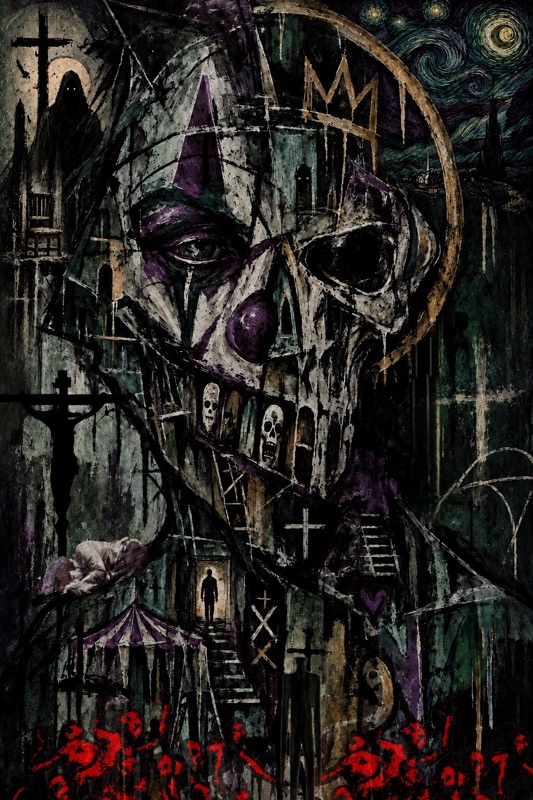
The Pariah, a gothic surreal portrait representing addiction, isolation, homelessness, violence, shame, and the human being beneath the ruins.
Comments
Post a Comment